


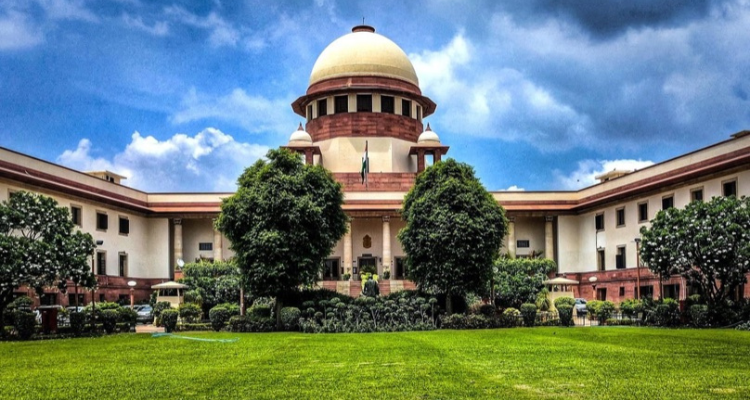
The Supreme Court on Friday granted bail to journalist Kommineni Srinivas Rao, who was arrested by the Andhra Pradesh Police in connection with allegedly defamatory remarks made during a live television debate that he moderated.
The apex court emphasized that Rao himself did not make any such statements and that his role as a journalist during the show warrants protection under the right to freedom of speech.
Background Of The Case
The controversy arose during a live debate on Sakshi TV, where a guest panellist made offensive comments about Amaravati, reportedly calling it a “capital of prostitutes” and stating that “only AIDS patients live there.” These remarks sparked outrage and led to a complaint alleging that the statements were derogatory, particularly toward women, and deeply hurt the sentiments of residents.
While Rao did not make the comments himself, the complaint pointed out that as the moderator of the debate, he neither intervened nor condemned the remarks—instead, he was allegedly seen laughing on air. This led to his arrest on the grounds of complicity and negligence.
Arguments In Court
During the bail hearing, Senior Advocate Siddharth Dave, appearing on behalf of Rao, argued that his client had no direct involvement in the panellist’s objectionable statements. Dave maintained that Rao’s presence as a moderator did not equate to endorsement of the remarks.
Opposing the bail plea, Senior Advocate Mukul Rohatgi, representing the Andhra Pradesh government, argued that Rao’s conduct—especially his reaction during the show—amounted to complicity. Rohatgi stressed that Rao’s failure to stop the defamatory comments or distance himself from them reflected a lack of professional responsibility.
Court’s Observations
The bench, however, took a different view. It noted that journalists moderating live television shows cannot always be held accountable for every spontaneous remark made by guests. The Court further observed that:
“Usually, when such outrageous statements are made, it prompts laughter.”
It ruled that freedom of speech, particularly that of journalists, must be protected, and found no direct evidence of Rao’s intent to defame or provoke. On that basis, the Court granted him bail.
Conditions Imposed
While allowing his release, the Court issued a cautionary note. It directed Rao not to involve himself in or permit such defamatory content during his programs in the future. This implies a higher responsibility on moderators to intervene actively during on-air discussions that may cross legal or ethical lines.
Conclusion
Court’s decision reaffirms constitutional protections for journalistic expression while also drawing a line against passive endorsement of defamatory content. With this ruling, the judiciary has highlighted the delicate balance between press freedom and accountability in an era of provocative live debates and real-time broadcasting.
Read More: Supreme Court, Delhi High Court, States High Court, International