


Bangladesh ICT Orders Trial Of Former PM Hasina Over 2024 July Movement Crackdown
In July 2024, Bangladesh witnessed a student-led uprising that rapidly evolved into a nationwide protest against the government.
Demonstrators demanded political reform, accountability, and an end to alleged abuses of power.
The unrest culminated in the ousting of Prime Minister Sheikh Hasina in August, paving the way for an interim administration led by Nobel Laureate Muhammad Yunus.
ICT’s New Charges
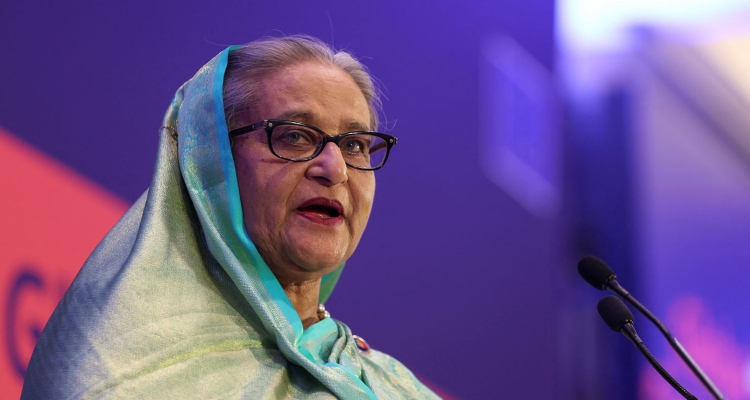
On Thursday, the International Crimes Tribunal (ICT)—a special Bangladeshi court tasked with prosecuting serious international offenses—formally ordered the initiation of trials against Sheikh Hasina. Chief Prosecutor Tajul Islam, speaking to reporters, stated, “Sheikh Hasina ordered the shooting and killing of protesters during the July Movement. The International Crimes Tribunal (ICT) has asked for the trial against her.”
Co-Accused & Contempt Proceedings
Alongside Hasina, the ICT has charged former Home Minister Asaduzzaman Khan Kamal and ex-Inspector General of Police Chowdhury Abdullah Al-Mamun for crimes against humanity allegedly committed during the July uprising. A 3-member bench, led by Justice Md. Golam Mortuza Mozumder, framed five distinct charges, accusing the trio of orchestrating murders, torching bodies, and other inhumane acts across Bangladesh.
Earlier this week, the tribunal also found Hasina guilty of contempt of court. On Wednesday, the same three-judge panel sentenced her to six months’ imprisonment after considering a complaint filed on April 30 by the Chief Prosecutor. That petition arose from public remarks made by Hasina and Awami League leader Shakil Alam Bulbul regarding the July uprising cases.
For the contempt hearing, senior lawyer A Y Moshiuzzaman was appointed as amicus curiae to ensure a thorough examination.
First Appearances & Procedural Schedule
During Thursday’s session, only former IGP Chowdhury Abdullah Al-Mamun appeared in court; the other accused were represented by their legal teams. The tribunal has slated the prosecution’s opening arguments for August 3 and 4, marking the formal commencement of a high-profile trial that could redefine accountability for alleged state violence.
Legal & Political Ramifications
The ICT’s decision to pursue charges against a former head of government is unprecedented in Bangladesh’s history. It underscores the tribunal’s expanded remit to address not only the 1971 Liberation War crimes but also subsequent episodes of mass violence and alleged human rights violations. Should the prosecution succeed, the verdict may dramatically alter Bangladesh’s political landscape and set a landmark precedent for prosecuting senior officials.
– Defence Preparation: Sheikh Hasina’s legal team is expected to file their written submissions ahead of the August hearings, challenging both the factual basis and the tribunal’s jurisdiction.
– International Attention: Human rights observers are watching closely, given the potential implications for judicial independence and fair-trial standards in Bangladesh.
– Diplomatic Reactions: Foreign governments and international bodies may weigh in, balancing respect for Bangladesh’s sovereignty with concerns over due process.
Conclusion
As the nation anticipates the tribunal’s opening statements in early August, all eyes remain on the ICT’s proceedings. The case against Sheikh Hasina, Kamal, and Al-Mamun represents a critical juncture in Bangladesh’s ongoing struggle with political accountability, the rule of law, and the legacy of state-sanctioned violence.
Read More: Supreme Court, Delhi High Court, States High Court, International