


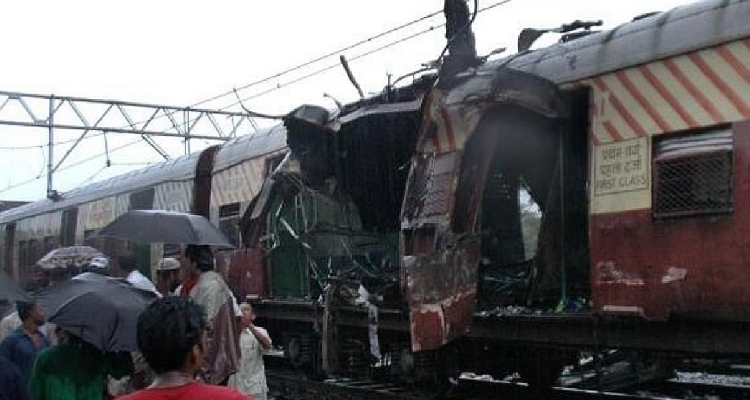
Nineteen years after the devastating 2006 Mumbai train blasts, the family of Kamal Ahmad Vakil Ahmad Ansari, who died in custody awaiting justice, gathered at his grave in Nagpur to read aloud the Bombay High Court’s acquittal order.
For them, it was not just a symbolic gesture, but a public affirmation that Ansari had always been innocent.
Insights
Ansari, a resident of Madhubani in Bihar, had lived a modest life running a small chicken shop and selling vegetables to support his wife and 5 children. That life was shattered when the Maharashtra Anti-Terrorism Squad arrested him in connection with the train bombings that killed over 180 people on July 11, 2006.
Labeled a terrorist and imprisoned, Ansari spent 16 years behind bars. In 2021, during the COVID-19 pandemic, he died in Nagpur Central Jail—4 years before the court finally cleared his name. He was buried in the Jaripatka Muslim Qabristan in Nagpur.
Acquittal Came Too Late
Last month, the Bombay High Court acquitted all 12 accused in the case, including Ansari. The judges ruled that the prosecution had “utterly failed” to establish its case, adding it was “hard to believe the accused committed the crime.” The court also struck down all alleged confessional statements as inadmissible, describing them as “copying.”
For Ansari’s family, the verdict was both vindication and heartbreak. “It is a hollow victory,” said Dr Abdul Wahid Sheikh, general secretary of Innocence Network and the only person acquitted earlier by a trial court in the case.
On Sunday, Ansari’s family, his younger brother, community members, and local clerics visited his grave. They read aloud paragraph 1,486 of the High Court’s July 21 judgment, which recorded the acquittal. “This was an act of resistance and remembrance,” Sheikh explained.
He recounted how Ansari’s years in prison stripped him of his dignity while his family lived under constant stigma. “His children grew up without a father. His wife bore the humiliation. His pleas went unheard,” Sheikh said, adding that the court’s late recognition of his innocence cannot undo the suffering.
Calling Ansari’s ordeal a grim reminder, Sheikh stressed that his case was not unique. “Countless innocents are branded as terrorists, locked away for decades, and sometimes die in prison before justice ever reaches them,” he said.
Read More: Supreme Court, Delhi High Court, States High Court, International